
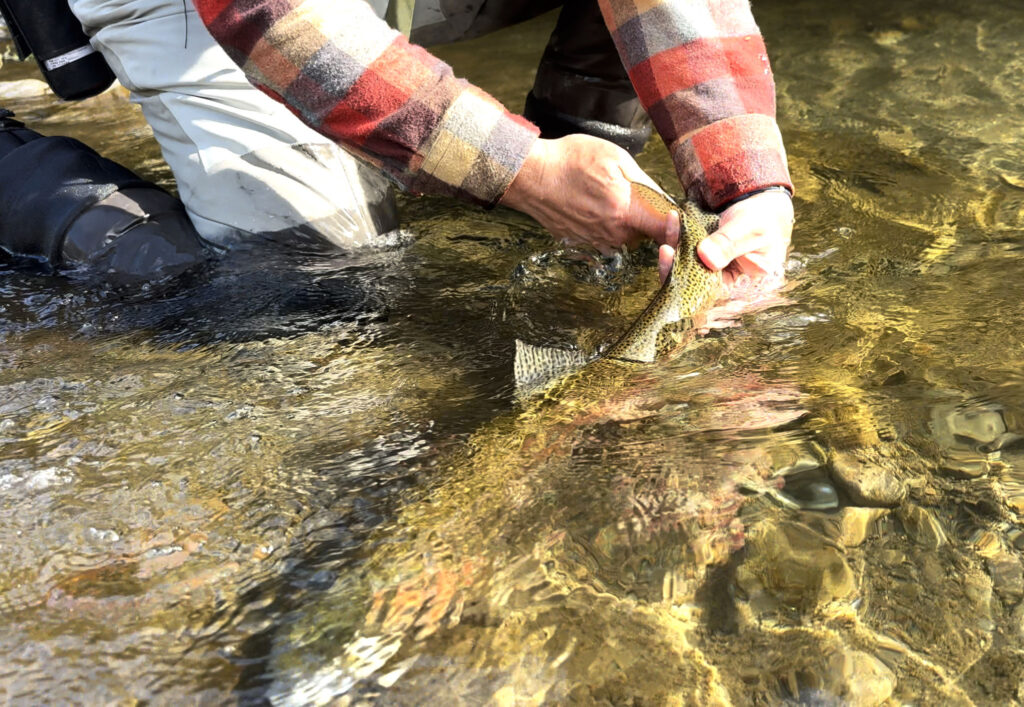
12-14-2025. Click here for English
2025年も間もなく終わろうとしていますが、皆様にとって良い一年でしたでしょうか?
さて、私は?と言うと、1月のボーンフィッシュに始まり、晩秋のイトウに終わるのが私の例年のルーティーンなのですが、毎月素晴らしい釣りに恵まれ、キャスティング練習も思う存分できたので、今年も最高にハッピーな一年でした。
来週からはまた新年のボーンフィッシングの初釣りに向けて、出発です。
ところで、皆さんは今年のご自分のクリスマスギフトは何かありますか?
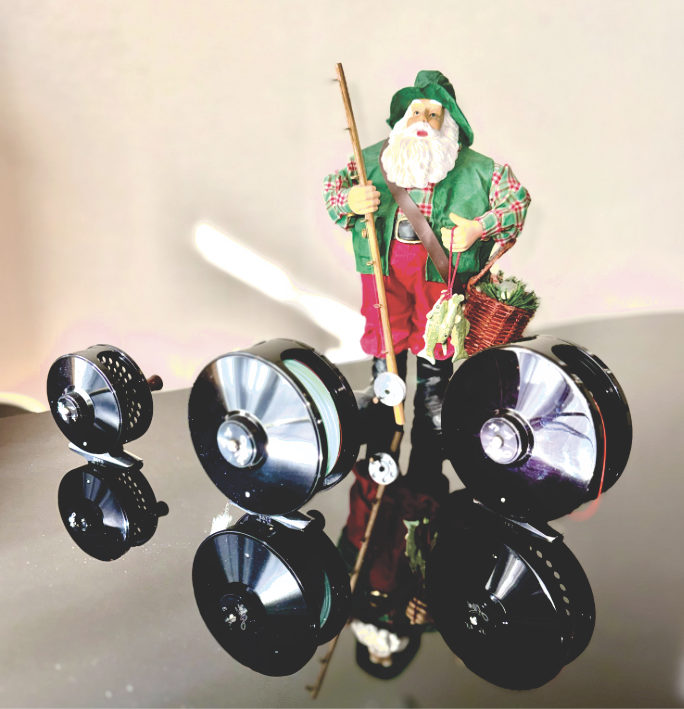
私のは、ツーハンド・スペイロッドと、このロッドに合わせるべく手配したAbel SDS#9/10リールです。
実は去年のクリスマスも全く同じリールを手に入れたのですが、正確に言うと今年のはデザイン違いのサイドパネルに穴のないソリッドのカスタムバージョンで今はまだ納品待ちです。私の場合は、リールのサイドパネルに空気孔をあしらったポーテッド仕様より、ソリッドタイプ(穴なし)が好み。これは、私の好きなトラウトリール、ハーディのユニーカ(Hardy’s Uniqua)のサイドパネルのデザインを少しだけ彷彿とさせるところがあって、これが自分の心を掴みます。
因みに何故、同じAbelリールを2年続けて手に入れるのかと言うと、その理由は単純。
30年以上使い続けている Abel が好きだから。
昔のAbelは、名器Sea Masterのドラグシステムとほぼ同じ機構を使ったコルクドラグシステム。 このコルクドラグ時代のAbelも私は数多く所有していますが、この時代のAbelもターポンやカジキを釣るのにだいぶ活躍してくれました。ただコルクドラグのウィークポイントは、厳冬期の北海道ではリールが水に浸るとコルク部が凍る可能性がある点。 それと、いくらリールがちゃんとした仕事をしてくれると言っても、コルクドラグのシステムは、強い魚が掛かった時に、“ジジー”っと言う逆転音が「ないこと。 逆転時の音無しは、気分的にあまりにも寂しい、、、
だから、やっぱり2016年にドラグシステムを根本的にシールドドラグにリニューアルした直近のSDSとSDFシリーズは私には素晴らしくよくできたフライリールと思っています。 逆転音の「ジジー音」も実に心地よい。
2021年は、北海道の多くの川が渇水と熱波に見舞われ、猿払川でイトウの大量死が大きく報じられた年でした。
そして今年は、世界中の至るところが記録的な猛暑に見舞われた中、北海道もその例外ではなく、同地を襲った熱波と渇水は2021年のそれを上回る状況であったので悪夢の再来かと思われましたが、ギリギリのタイミングでイトウの生息地域にまとまった雨が降ったことで、かろうじて大惨事の再来は免れたかに見えます。
この中で日本の一般的な鮭であるシロザケ(Chum salmon)は、もしかしてこの2、3年で壊滅的な影響を受けている可能性があるのではないかと、時々、川の様子を見ている私の素人目には映ります。
北海道大学の鮭類生態学の帰山雅秀教授のチームは、昨年、国際機関である北太平洋遡河性魚類委員会(North Pacific Anadromous Fish Commission)に世界三大サケ類シロザケ、カラフトマス、ベニザケ(Chum, Pink, Sockeye)の資源量や漁獲データの研究結果を論文にしています。
それによると北海道の鮭の回帰数はこの20年間で四分の一にまで減少したと言う事実がある中で、特に近年その悪い流れが劇的に加速しているとのこと。その要因の一つが、「上記3種類の鮭の仲間の中では比較的低水温を好まないピンクサーモン(カラフトマス)が、彼らにとって従来は冷たすぎたベーリング海に大量に移動しそこで餌を確保し始めたことで、本来ベーリング海を成長の原資としてきた日本のシロザケが、ピンクサーモンとの激しい餌取り競争に負けて生存競争に勝てなくなり、これが日本のシロザケの個体数減少の更なる急加速を招いている」、と結論付けています。
帰山雅秀教授は 「海水温の上昇によって、ベーリング海全体の生態系が変わってしまった。日本のサケに対する影響がこれほど大きいとは、私たちも驚いている。」 とのコメントをしています。
で、これらの研究結果を、スチールヘッドへの影響含めてより明確に理解したいと思い、私は昨日、この分野のアメリカにおける第一人者であり、スペイキャスティング界を代表する人物の一人でもあるリック・ウィリアムズ博士に連絡を取って、この研究についての見解を伺いました。
以下が博士からの回答です。
「ヒロへ、
残念ながら、私は日本の研究チームの仮説はおそらく正しいと考えます。
スチールヘッドについては、その生息域全体、特にスキーナ川に近い北太平洋および中部北太平洋で何が影響しているのかを解明するのは、かなり難題です。一方で、北太平洋におけるチヌーク(キングサーモン)の減少や崩壊については、多くのデータがあり、そこから一定の推論はできます。
グレッグ・ルッジェローネとその同僚たちは、この問題を長年研究してきました。彼らの研究によると、過去10〜15年間でソックアイ(ベニザケ)とピンクサーモン(カラフトマス)の数が増加する一方で、チヌークの個体群は減少しています。 ルッジェローネらのデータは、海洋で2年齢に達したチヌークが、ちょうどその頃にソックアイやピンクサーモンと同じサイズ帯で直接的な餌の競争関係に入ることを示しています。この時期、ソックアイやピンクサーモンの方がより効率的に餌を捕らえることができ、その結果、チヌークが競争に敗れ、崩壊につながっていると考えられます。
また、彼らは、日本のチャムサーモン(シロザケ)の人工ふ化放流と、太平洋沿岸各地でのピンクサーモンの大量放流が、このような競争関係を生み出す要因になっていると指摘しています。その傍ら、海洋の温暖化はピンクサーモンに有利に働き、結果的にチャムやチヌークの急減に対して影響を及ぼしている可能性が十分にあります。
私は、スチールヘッドの減少については依然として謎が多いと感じています。我々にはスチールヘッドが最も気になる魚ですが、商業的な観点やアラスカ先住民の自給的漁業という視点から見れば、チヌークやチャムの方が経済的に重要です。また、アラスカではソックアイが最も商業的価値の高いサケ種だと言えるでしょう。
ヒロの参考になるかわかりませんが、以上が日本の研究者たちの仮説はおそらく正しいと考える理由です。
リック」
うーん、日本のシロザケは急減しているだけでなく、それが主因とは言えないとしても、なんと北大西洋岸のチヌーク(キングサーモン)の激減にも関与している可能性があるとは、、、。 それにしてもスチールヘッドは、どうなんだろう?
カナダBC (ブリティッシュコロンビア)州のスキーナワイルド自然保護基金 (SkeenaWild Conservation Trust) の10月最新月次レポートによると、確かに今年のピンクサーモンの遡上数はかなり良好であるのに対して、チヌーク(キングサーモン)の回帰数は急減していると報告している。
加えてスキーナ川流域のスチールヘッドの遡上数は、過去70年で7番目に悪い数値であったとのこと。また、スチールヘッド減少の主要な理由は、アラスカ沖の漁業船によって意図せずに捕獲された食用商業価値のないスチールヘッドの海洋投棄によって、スキーナに戻るべき魚の10〜40%が失われているのが主要理由と推定される、と主張しています。これに8月、9月のエルニーニュの影響による熱波と渇水が追い討ちをかけた。
このエルニーニュの影響は今年の北海道でも西カナダとほぼ同時期に起きていて、春までは気温と水温状況は比較的安定していたのに、8、9月入ると急激に熱波と渇水で悪化方向に向かいました。
このような状況の中、自分の釣りを語るのはあまりにも能天気ですが、今年の私の結果は?と言うと、イトウ釣りに関してはシーズン前半までは調子良かったのですが、夏の熱波と渇水のあとは、いい事がありませんでした。そのかわり、渓流のレインボートラウトは、私には当たり年でした。レインボーは水温が比較的安定して低めの渓流を見極める限りポイントが絞り易く、それが今年のレインボーの好調さにつながっていたのかもしれません。
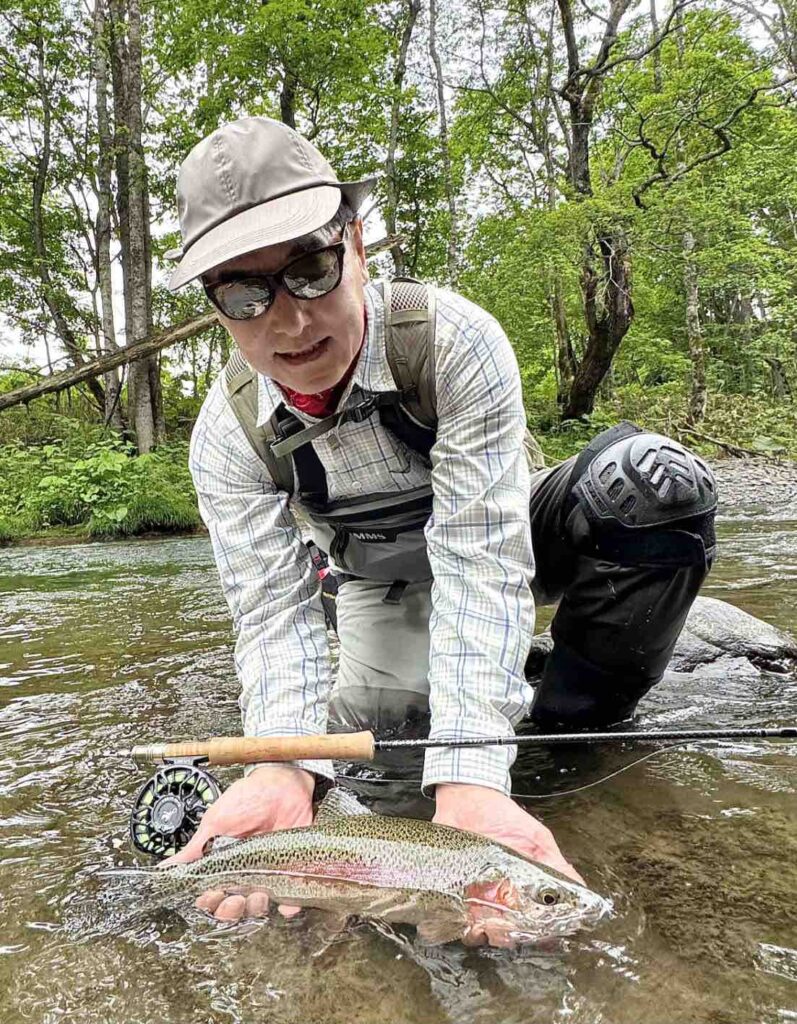
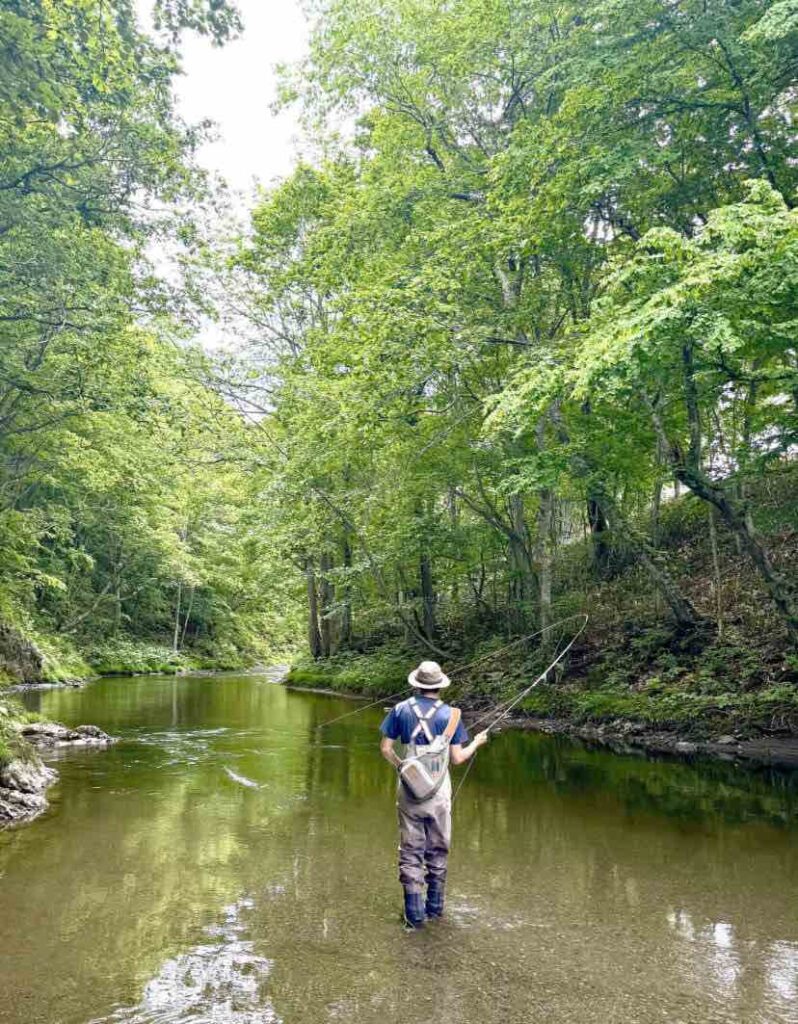
緑萌える春の北海道は、イトウ、レインボー共に活性が高かった。
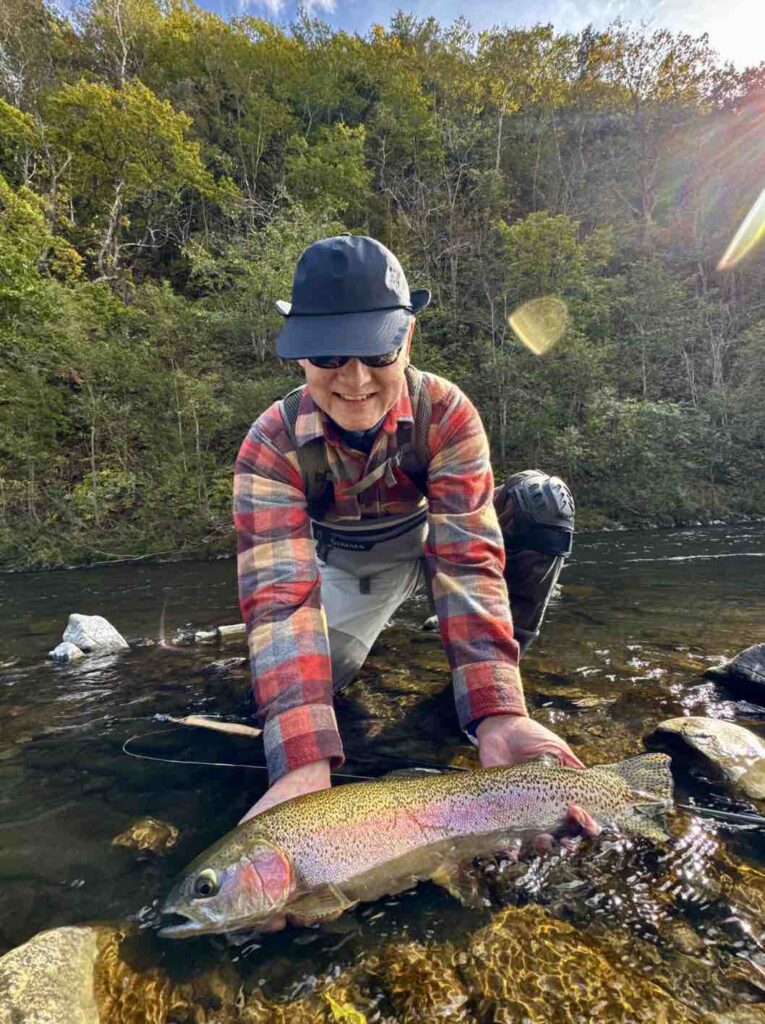
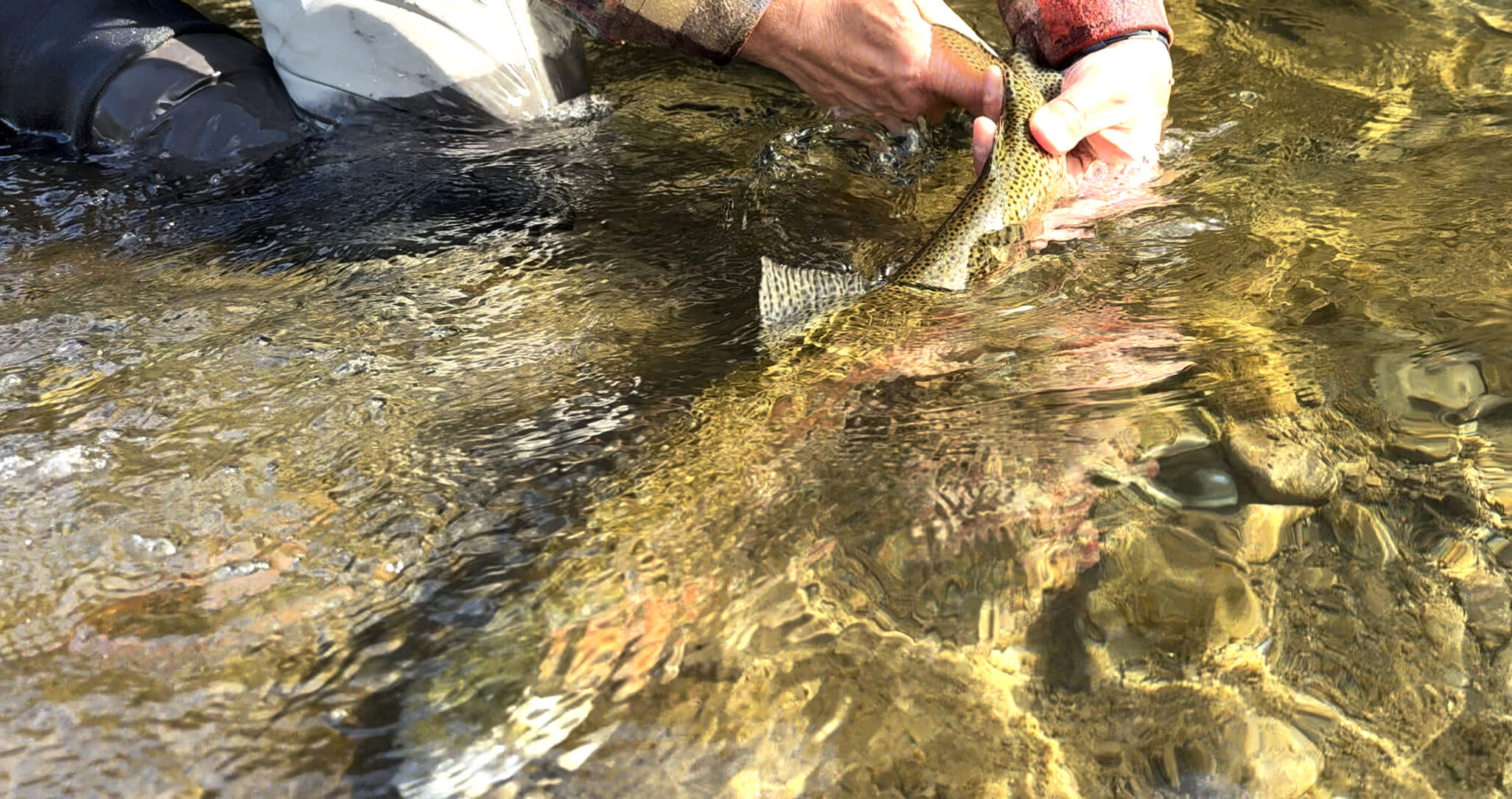
これも60cmを優に越える自然繁殖のレインボー。
ここで気分転換に 「Abelにまつわる、やらかし話」 のエピソードをひとつ。
2024年の初夏、北海道のある川で、友人の翔平と釣りをしていたときのことだ。
推定80センチ近いスチールヘッドを見つけ、勝負を挑んだものの、 あえなくフックを伸ばされて完敗した。
(この一部始終は、ここをクリック。)
そして今年の秋口。翔平が「もう一度あの場所を見に行こう」と機転をきかしてくれた。
何かを感じ取ったのだろう。
土手の上から水面をのぞき込む。
すると、ナ、ナント! 昨年とまったく同じスポットに、巨大な魚が悠然と泳いでいるではないか!
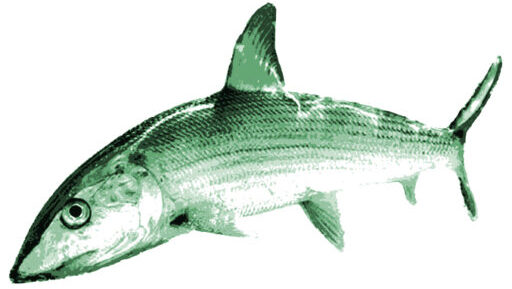
最初に目に飛び込んできたのは、深いグリーンを帯びた幅広の背中。まるで巨大なボーンフィッシュのように見えた。
次に「もしかして鮭か?」と思ったが、そのすぐ隣を本物の鮭が並んで泳いでおり、比較にならない。
そいつの推定体長、90から100センチ。鮭がまるで子どものように小さく見える。
間違いない。スチールヘッドだ!
観察を続けると、その巨体をゆったりと左右に揺らしながら、水面下30〜60センチのあたりを泳いでいる。
その動きから伝わる「やる気」は尋常ではなかった。
昨年、同じ場所で出会った一尾は、川底にべったりと張りつき、まるで死んだように動かず、口を開かせるまでに一時間以上もかかった挙げ句、結局バラしてしまった。
だが、いま目の前にいる奴はまったく違う。
明らかに活性が高い。ーーこれは勝負になる。そう直感した。
ロッドは6番のシングルハンド。ラインはWF6F。リールはもちろんAbel SDF。
リーダーを02X(18ポンド)に換え、2Xストロングの4番フックに巻いたドライフライを結ぶ。
強いリーダーを使うぶん、ドラグテンションを少し強めに締めた。
翔平が冷静な一言を放った。
「真崎さん、その魚、恐らく北海道の歴代記録を塗り替えることになる一匹ですよ。」
えっ! それって、日本記録ってぇことじゃねぇか?!
彼は、それだけの巨体の持ち主であるスチールヘッドを目の前にしても、いつもの沈着冷静さを失っていなかった。でも、その言葉に包含される意味合いは、僕にはとてつもなく大きいものだった。
ここは魚がいる下流のスポットに最高のドリフトでフライがデリバリーされるように、ウィグルメンドとパラシュートキャストを組み合わせたプレゼンテーションで行こう。
そいつのいるところまで届かせるラインの長さに加えて、ドライフライをダウンアクロスにナチュラルにドリフトさせるための余裕を持たせたスラックライン・プレゼンテーションができるように、長めのエキストラのラインを足元に引き出して束ねた。このキャストはいつも練習しているので全く問題ない。
次に、フックアップしたあとの展開を頭の中でシミュレーションする。
考えられるリスクは二つ。ひとつは、フッキングの位置が悪い場合、口切れを起こすこと。アワセは一呼吸おいて、ゆっくり行おう。もうひとつは、リグの弱点、 2Xストロングのリメリック形状のフック。この形状のフックは強い部類に入るフックではない。果たして、この怪物のパワーに耐えられるか。フックに過度なプレッシャーをかけないよう、心に刻んだ。
準備は整った。
深呼吸を一回とった。
自分から魚は見えていないが、奴のいる場所は正確に分かっている。
一投目。いい感じにフライがナチュラルドリフトした。何も起こらなかった。
二投目、三投目も同じドリフトを繰り返したが、やはり反応はなかった。
四投目だったと思う。今度は魚の真上と思われるスポットで、スケーティングをかけてドライフライが水面でもがく様子を演出しながら滑らせてみた。
すると、ボコッと、ドライフライはゆっくりと吸い込まれた。
一呼吸おいた。そしてフックセットした。
合わせた右肩の腕の関節部にガシッと重みがのった。奴は止まったままだ。
巨魚をかけたときに訪れる、あの独特の「間」だ。
魚もこちらも、一瞬の静止の中で何かを考えているのだろうか。
今、何が起こったのか、これからどうするのか、 互いの脳内が混乱しているのかもしれない。
その「間」は、数秒にも感じるが、実際には一秒にも満たない一瞬だ。
だが、釣り師の脳内時計はこの瞬間、完全に壊れる。
そして、その一瞬が終わると、Abelリールが、けたたましい悲鳴を上げた。
奴が、爆発的なスピードで下流に突っ走ったのだ。
「マズい!」
締めたつもりのドラグが、あれでも弱かったか!
12m先でフッキングした魚が、一瞬でラインを20mまで引きずり出していく。
スプールを押さえて止めようとしても、慣性が強すぎて効かない。
流れの緩い川で、これほどのパワー。
わずか数秒で二十メートル。ボーンフィッシュでさえ、ここまでのスピードは出さない。
その時――ラインが、ズンッ!と衝撃とともに止まった。
「ヤバい!」
あまりの力で、フライラインがリールのスプールとリムの間に食い込み、完全にスタックしてしまったのだ。
Abelの精密さからすれば、本来あり得ないはずのトラブル。それでも、奴は止まらない。
リーダーは18ポンド、切れることはない。だが、魚の馬鹿力はそれを上回った。
僕の手では引き出せないスタックしたラインを、奴はリールのリムの縁をこすりながら、ズルズルと引きずり出していく。
すると今度は、ロッドのガイドの中を二本のラインが通っているように見えた?!
よく目を凝らして見ると、ラインを覆うPVCの表皮が、まるでリボンのようにメリメリと音を立てて剥がれていっているではないか。
このままでは一緒に下流へ追うしかない。
だが、あと数メートル先には、水中に複雑に入り組んだ木の根。
そこへ突っ込まれたら万事急須だ。
迷っている間にも、やつの勢いはまるで衰えない。
やがてラインは完全にロックし、奴でさえもこれ以上引き出せなくなった。
6番ロッドは、コルクハンドルの奥まで深く曲がる、僕の体ごと引きずられそうになった、その瞬間――
ふっと、軽くなった。
針が外れたのだ。
ティペットの先には、見事に伸びきった2Xストロングのフック。
その後ろに続く三メートルのフライラインは、真っ二つに裂かれていた。
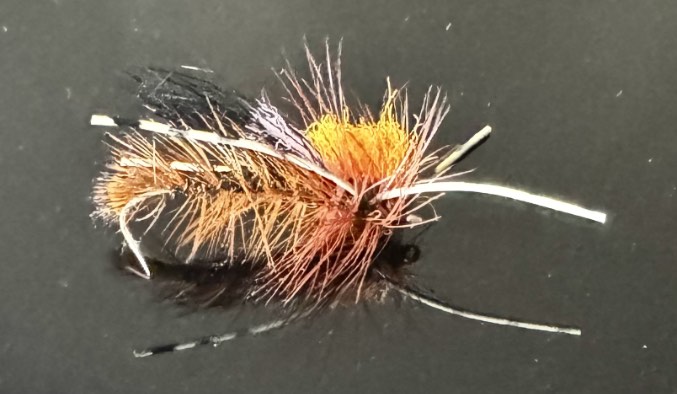
やらかしちまった。
目の前で今起こったことに対して虚無感を感じる前に、その起こったことの事実を信じたくなくて、フライが外れたことが嘘であって欲しい、と天を仰いだ。
そして、今やらかしたことを自分の心の中で受け止める前に、翔平からのせめてもの、慰めになる一抹の言葉が来るのを待った。
翔平が口を開いた。
「真崎さん、日本記録になるべき魚でしたね。あそこまでのサイズは僕の釣り人生でも今まで見たことがないです。また出会えるレベルの奴じゃないですよ。」
全くの慰めにならない冷徹なる一言。その言葉は、僕の心に見事に鉄杭を打ち込んだ、、、
翌日の夕方、東京行きJALの最終便に乗る前に、もう一度あの場所へ立った。
あいつがまだいるはずもないことは、百も承知だった。
それでも、どうしても見ておきたかった。
―あれから二ヶ月。
また、新しいAbelリールを注文している自分がいる。
世界の魚たちが危機に瀕しているというのに、釣り師としての自分はなんと身勝手なのだろう。
それでも僕は、魚をいじめ、魚の減少を嘆き、それでいて魚を愛おしく思う。
釣り師とは、どうしようもなく馬鹿な生き物だ。
そして――この馬鹿さかげんも、いつか地球が許さなくなる日が来るのかもしれない。
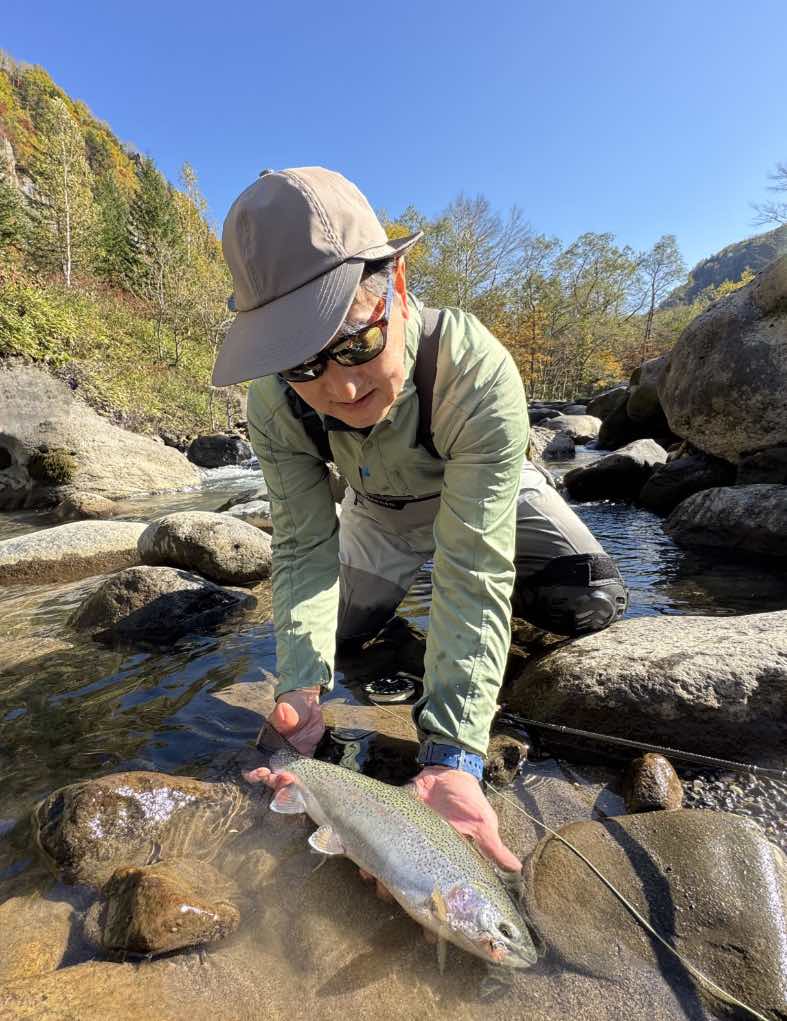
無垢に美しいレインボーがドライに飛び出した。 止めようのない自分がいる。
The Fish I Saw Through My Abel
As 2025 draws to a close, I hope it’s been a good year on the water for all of you.
For me, my routine remains unchanged—bonefish in January and Taimen in late autumn. This year, every month brought great fishing, plenty of casting practice, and countless moments of joy. I couldn’t have asked for a better season.
And next week, I’ll be heading out again for my first bonefish trip of the new year as usual.
By the way, have you chosen your Christmas gift for yourself this year?
Mine is a two-handed Spey rod, along with an Abel SDS #9/10 reel specially ordered to match it.
Actually, I got the exact same reel last Christmas too—but precisely this year’s is a custom version with solid side panels instead of the ported one.
Personally, I prefer the solid side plate over the ported design. There’s something about the clean, unbroken surface that reminds me a bit of the classic Hardy Uniqua trout reel—one of my all-time favorites. That subtle resemblance is what really captures my heart.
Why am I buying the same Abel reel two years in a row?
The reason is simple: I’ve loved Abel for over 30 years.
Old Abels used a cork drag system very taking the same drag system from the famous Sea Master. I still own quite a few of those old Abel reels from the cork-drag era, and they served me well back then—especially for tarpon and sailfish fishing.
However, the weakness of the cork drag is that in the freezing winters of Hokkaido, if the reel gets wet, the cork can freeze. And no matter how well the reel performs, there’s another drawback—the cork drag system produces no “zizzing” sound when a fish runs. That lack of reverse sound feels a little too sad for my liking.
That’s why I believe the modern SDS and SDF series, which replaced the old system with a fully sealed drag design in 2016, are absolutely superb fly reels. The reverse “zizz” sound they make is truly music to my ears.
Back in 2021, much of Hokkaido suffered from drought and heatwaves, and the mass die-off of Taimen in the Sarufutsu River made national headlines. This year, the world once again faced record-breaking heat, and Hokkaido was no exception. At one point, the heat and drought surpassed even those of 2021, and I feared another nightmare was unfolding—but just in time, heavy rains fell over the Taimen’s habitat, sparing them from catastrophic loss.
Amid all this, my own casual observations suggested that Japan’s chum salmon may have suffered severe impacts over the past few years.
Professor Masahide Kaeriyama and his team at Hokkaido University’s Laboratory of Salmon Ecology published a paper last year with the North Pacific Anadromous Fish Commission, presenting their research on the population trends and catch data of the three major Pacific salmon species—chum, pink, and sockeye.
According to their findings, while there is the fact that the number of returning salmon in Hokkaido has declined to just one-quarter of what it was twenty years ago, more concerningly, that downward trend has accelerated dramatically in recent years.
One of the key factors, they concluded, lies in the shifting balance of the North Pacific ecosystem. Among the three major salmon species—chum, pink, and sockeye—it is the pink salmon that prefers relatively warmer waters than others. As ocean temperatures have risen, pink salmon have begun migrating in large numbers into the Bering Sea, a region that was once too cold for them. There, they have found abundant feeding grounds. Meanwhile, Japan’s chum salmon, which historically relied on the Bering Sea for their own growth and nourishment, are now losing the food competition to these aggressive newcomers. This interspecies rivalry has likely accelerated the dramatic decline of Japan’s chum salmon populations.
Professor Masahide Kaeriyama commented, “Rising sea temperatures have transformed the entire ecosystem of the Bering Sea. We never imagined the impact on Japan’s salmon could be this profound.”
Wanting to gain a clearer understanding of these findings—including their possible implications for steelhead—I reached out yesterday to Dr. Rick Williams, one of America’s leading authorities in this field and a prominent figure in the world of Spey casting, to ask for his thoughts on the study.
“Hiro,
Unfortunately, I think their hypothesis is probably correct. It’s been hard to figure out, influences on steelhead across the range and in the north and middle North Pacific where they would be in proximity to the Skeena.
We have better data and therefore more inference into the decline and collapse of Chinook populations in the north Pacific. Greg Ruggerone and colleagues have been studying this for some time. As both sockeye and pink salmon numbers increase over the last 10 to 15 years, Chinook populations have declined. Ruggerone and colleagues have data that suggests as the Chinook in the ocean reach age 2, they are direct size competitors with both sockeye and pink salmon who are more efficient forger for prey items at that particular stage of life. That’s where we see the Chinook collapse.
Ruggerone and colleagues note that both chum hatchery primarily from Japan and pink salmon hatchery all across the pacific rim are out, planting lots of juvenile fish, and therefore setting the stage for these competitive interactions. I think it entirely possible that the warming of the ocean would indeed favor the pink salmon and have similar effects both on chum and Chinook populations.
For me, steelhead declines remain more of a mystery, though they are the primary fish. I am concerned about as an Angler. From a commercial point of view and subsistence point of view for native Americans in Alaska, the Chinook and the chum are probably more commercially important. Sockeyes are probably the most commercially important fish in Alaska.
Don’t know if this helps much, but I think the Japanese researchers are likely correct in their hypothesis
Rick“
Hmm… Japan’s chum salmon aren’t just in sharp decline; astonishingly, they might even be linked—though perhaps not as the sole cause—to the dramatic collapse of Chinook (king salmon) populations in the PNW!
And that makes me wonder: what about steelhead?
According to the October monthly report from the SkeenaWild Conservation Trust in British Columbia, Canada, while the number of returning pink salmon this year has been quite strong, the run of Chinook (king salmon) has sharply declined.
Furthermore, the number of returning steelhead in the Skeena River watershed was reported to be the seventh lowest in the past seventy years. The report suggests that one of the primary reasons for the decline is the incidental capture and subsequent ocean discarding of steelhead—fish with little or no commercial value—by fishing vessels operating off the coast of Alaska. It is estimated that 10–40% of the steelhead that would otherwise return to the Skeena are being lost in this way.
To make matters worse, the heatwaves and drought brought by the El Niño phenomenon in August and September further compounded the problem.
The effects of this year’s El Niño occurred in Hokkaido almost at the same time as in western Canada. Although air and water temperatures remained relatively stable through spring, conditions deteriorated rapidly in August and September due to severe heat waves and drought.
In such conditions, talking about my own fishing may sound a bit carefree, but if I look back on my season, it was a mixed one. The early part of my year chasing taimen went quite well, but once the summer heat and drought arrived, my luck completely turned.
On the other hand, it turned out to be an excellent year for rainbow trout in the mountain streams. Rainbows tend to favor cooler, more stable waters, and once I identified the right stretches with lower temperatures, the fishing became surprisingly consistent. Perhaps that’s what made this year such a good one for rainbows.
In the lush, green spring of Hokkaido, both taimen and rainbow were highly active.
This one is also a wild, naturally spawned rainbow well over 24 inches.
To take a break, let me share a lighthearted story — an “Abel incident,” you might call it.
It was early summer of 2024. I was fishing a river in Hokkaido with my friend Shohei when we spotted a steelhead—an enormous fish, close to 32 inches. I hooked it… and lost it. (Here is the story.)
Then, as autumn began to tint the trees, Shohei turned to me with a knowing grin and said, “Let’s go back to that spot one more time.”
Perhaps he had a feeling — that something was still waiting for us there.
From the top of the riverbank, we peered into the clear water.
Unbelievably—a huge fish, swimming in the exact same place as last year!
The first thing that caught my eye was its wide, green back glinting under the light. For a second I thought it was a giant bonefish. Then, maybe a salmon? But a real salmon was swimming right beside it, and the difference was obvious.
The big one dwarfed the salmon. 36 inches, maybe 40 inches long.
There was no doubt—it was a steelhead.
As we watched, it swayed from side to side 1 to 2 feet below the surface, its thick body moving with purpose. Every motion radiated that electric energy—the look of a fish ready to strike.
The one I had met in this same spot a year earlier had lain flat on the bottom, sluggish and heavy, taking more than an hour of careful teasing before I finally lost it.
But this fish was different.
It was alive, alert, and aggressive. I knew right away—this one was going to take a fly.
I rigged up fast. A 6-weight single-hand rod, WF6F line, my Abel SDF reel.
I swapped the leader to 02X—eighteen-pound test—and tied on a size 4 dry fly with a 2X strong hook.
Since I was using a strong leader, I cranked the drag a little tighter.
Shohei looked at the fish, calm as always.
“Hiro-san,” he said quietly, “that fish might break the all-time record for Hokkaido.”
I froze.
Wait—that would mean a Japan record!
Even with such a monster in front of him, Shohei hadn’t lost his composure. But the weight of his words hit me hard.
I planned my cast carefully. The drift had to be perfect.
I decided to combine a wiggle mend and a parachute cast to deliver the fly just right, with plenty of slacks in the line to let the dry skate naturally across the current.
I pulled out extra line at my feet—just enough to let the fly drift down and across. This was a cast I’d practiced a hundred times.
Next, I began to simulate how things might unfold after the hookup.
Two risks came to mind. The first was the possibility of the hook tearing out if it wasn’t set in the right spot — I’d need to set the hook slowly and let it take hold. The second was the weak point of my rig: a 2X strong limerick-shaped hook. This type of hook isn’t exactly known for brute strength. Would it really withstand the power of such a monster? I reminded myself to keep the pressure steady — never excessive — and hold that thought firmly in mind.
Everything was ready.
I took one deep breath.
I couldn’t see the fish now, but I knew exactly where it was.
The first cast drifted perfectly. Nothing.
Second cast, same drift. Nothing.
Third, again—nothing.
Then came the fourth cast.
The fly landed just upstream of the fish’s lie, and as it drifted, I gave it a little skate—just enough to make it quiver on the surface.
Suddenly, a slow, heavy sound: bloop.
The fly disappeared.
I took a brief pause, then set the hook.
The weight hit my right shoulder hard—solid, immovable. The fish didn’t move.
That’s the moment I call the pause.
Every angler knows it. When a huge fish first feels the hook, it freezes for an instant—as if trying to understand what just happened, deciding what to do next.
To me it always feels like several seconds, but in reality, it’s probably less than one.
Time breaks down completely in that space between silence and chaos.
Then, it moved.
The Abel screamed—an angry, tearing sound—and the fish exploded downstream with impossible speed.
“Damn!” I thought. The drag was tight, but not tight enough.
40 feet out, it was already unstoppable. I tried to palm the spool, but the force was beyond control. The current was slow, yet the fish ripped line like a torpedo, 70 feet gone in seconds.
Not even a bonefish could run like that.
Then—suddenly—the line stopped with a violent thud.
“Not good.”
The speed and power had jammed the line between the spool and the rim of the reel—something that should never happen on an Abel. I pulled hard, but it was stuck solid.
The leader was eighteen-pound, so it wouldn’t break.
Then, to my surprise, it looked as if two lines were running through the rod guides!
Looking closer, I realized the PVC coating on the line was peeling away with a rippling, tearing sound, like a ribbon coming undone.
I thought about running downstream, but just ahead was a cluster of submerged roots.
If the fish reached them, it would be over.
Still, the run didn’t stop.
The reel jammed completely.
The six-weight bent deep into the cork handle.
I felt myself being pulled forward.
Then—nothing.
The pressure vanished.
The hook had come free.
At the end of the eighteen-pound tippet hung a perfectly straightened 2X-strong hook.
Behind it, 10 feet of fly line, split clean in half.
I’d done it again. I’d blown it.
Before I could even feel despair, my mind refused to believe what had just happened.
I looked to the sky and wished it wasn’t true—that the fly hadn’t really come loose.
Then I waited, hoping Shohei might say something to soften the blow.
He did.
“Hiro-san,” he said gently, “that was a record fish. I’ve never seen one that big in my whole life. You probably won’t see another like it again.”
It was the coldest kind of kindness. His words drove a spike through my heart.
The next evening, before boarding the last JAL flight back to Tokyo, I returned to that spot.
Of course, I knew it was foolish. There was no chance the fish was still there.
But I had to look.
Two months have passed since that day.
And once again, I find myself ordering a new Abel reel.
How selfish I must seem—as an angler, obsessed with the chase—while the fish of the world face crisis after crisis.
And yet, I can’t stop. I pursue them. I trouble them. I grieve their decline. And I love them, deeply, helplessly.
We anglers are hopeless fools, bound by a passion we can neither justify nor abandon.
And perhaps one day, the Earth itself will no longer indulge such foolish passion.
A pure, beautiful rainbow trout rose to take a dry fly — and there I was, unable to stop myself.